 Chicago
 Wheaton
Blog


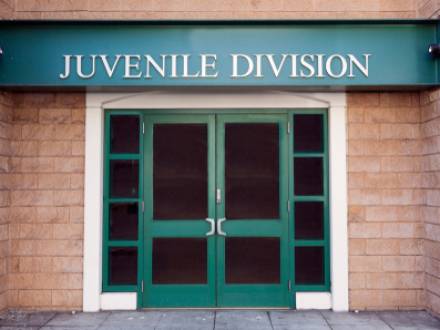 As a parent, it can be devastating to find out that your child has been accused of a crime. The outcome of juvenile court proceedings can have a serious impact on your child’s future. In some cases, the court will even go so far as to prosecute a juvenile as an adult. If you need help navigating these proceedings, reach out to a Wheaton, IL juvenile defense lawyer today.
At Davi Law Group, LLC, we can provide you and your child with clear guidance. Attorney Dion Davi is a solo practitioner, so you can rest assured that you will receive a well-thought-out, personalized defense for your case.
When a minor is taken into police custody in Illinois, the process looks different from an adult arrest. Officers are required to treat juveniles differently and with added care. In many cases, the minor is taken to a police station for what is called a station adjustment. This is an informal process meant to resolve lower-level offenses without filing a formal court case.
During a station adjustment, police may question the minor, contact the parents, and decide whether the situation can be handled outside of court. Parents are usually notified right away. If the issue is minor and the child has no serious criminal history, the case may end there. No juvenile court record is created.
If the offense is more serious, or if a station adjustment is not appropriate, the case may be referred to juvenile court. This means the State files a petition alleging that the minor committed a delinquent act under the Illinois Juvenile Court Act. From that point on, the case follows the juvenile court process.
The first formal court appearance in a juvenile case is the arraignment. Parents are expected to attend. At this hearing, the judge explains the charges to the minor in plain terms. The court also reviews the minor’s rights and makes sure the child understands what is happening.
The minor will be asked to admit or deny the charges. An admission is similar to a guilty plea in adult court. A denial means the case will move forward. Many families choose to deny the charges at this stage so they can review the evidence and speak with a lawyer.
The judge may also address whether the minor can remain at home while the case is pending. If the child is not already detained, the court often allows the minor to stay with family under certain rules. The court then sets future dates, which can include a detention hearing or trial.
If the State believes a minor should not be released, a detention hearing is held quickly. In Illinois, this usually happens within 40 hours. The purpose is to decide whether the child should remain in a juvenile detention center while the case is ongoing.
At this hearing, the judge looks at several factors. These include the seriousness of the alleged offense, the minor’s prior history, school attendance, and whether the child is likely to return to court. Parents may be asked questions, and conditions of release may be discussed.
Detention is not automatic. Many juveniles are released to their parents with conditions, such as curfews or school attendance requirements. In fact, the Annie E. Casey Foundation reports that youth incarceration in the United States dropped by 77 percent from 1995 to 2023, reflecting a broader focus on supervision rather than confinement.
If a juvenile case does not resolve quickly, it proceeds to trial. Juvenile trials are usually heard by a judge, not a jury. The rules of evidence still apply, and the burden of proof is the same as in adult court.
The State must prove the allegations beyond a reasonable doubt. Witnesses may testify, evidence is presented, and the defense can challenge the State’s case. The minor does not have to testify.
At the end of the trial, the judge decides whether the allegations are proven. If they are, the court enters a finding of delinquency. If not, the case is dismissed. A delinquency finding is not the same as an adult criminal conviction, but it can still carry serious consequences.
If a minor is found delinquent, the case moves to a dispositional hearing. This is similar to sentencing in adult court. The focus here is not punishment alone. The court looks at rehabilitation, accountability, and public safety.
Possible outcomes can include probation, counseling, community service, or placement in a treatment program. Some minors may be ordered to attend school programs, substance abuse counseling, or mental health services. In more serious cases, the court may order placement in a juvenile facility.
Illinois law gives judges wide discretion in these decisions. In 2026, courts continue to emphasize services that address the underlying issues that led to court involvement. Parents often play a key role in these plans, and compliance is closely monitored.
Some parents are surprised to learn that certain juvenile cases can be handled in adult court. In Illinois, this can happen through a process called transfer or exclusion. It is typically reserved for older minors accused of very serious offenses.
Relevant factors may include the minor’s age, the nature of the charge, and prior history. If a case is transferred, the child faces adult procedures and penalties. This can have lifelong consequences.
These cases are complex and move quickly. Early legal guidance is critical when adult court is a possibility. Understanding the risks helps families make informed decisions from the start.
Juvenile court can feel overwhelming, especially for parents facing it for the first time. The process moves fast, and each decision matters. Having clear guidance can make a real difference. At Davi Law Group, LLC, we can provide you with confident representation to protect your child’s rights. To schedule a free consultation, call our Wheaton, IL criminal defense attorney at 630-580-6373 today.
 A lawyer’s time and advice are his stock and trade.

 28371 Davis Parkway, Suite 103, Warrenville, IL 60555
 (630) 657-5052
 (888) 350-9195
1776 S. Naperville Road, Building A, Suite 105, Wheaton, IL 60189(630) 580-6373(888) 350-9195
321 N. Clark Street, Suite 900, Chicago, IL 60654(312) 985-5676(888) 350-9195
58 N. Chicago Street, Suite 102,(815) 582-4901(888) 350-9195
(888) 350-9195
1776 S. Naperville Road, Building A, Suite 105, Wheaton, IL 60189(630) 580-6373(888) 350-9195
321 N. Clark Street, Suite 900, Chicago, IL 60654(312) 985-5676(888) 350-9195
58 N. Chicago Street, Suite 102,(815) 582-4901(888) 350-9195



